OverStitch Endoscopic Suturing System
Endoscopic suturing system that allows placement of durable, full-thickness sutures through a minimally invasive approach.
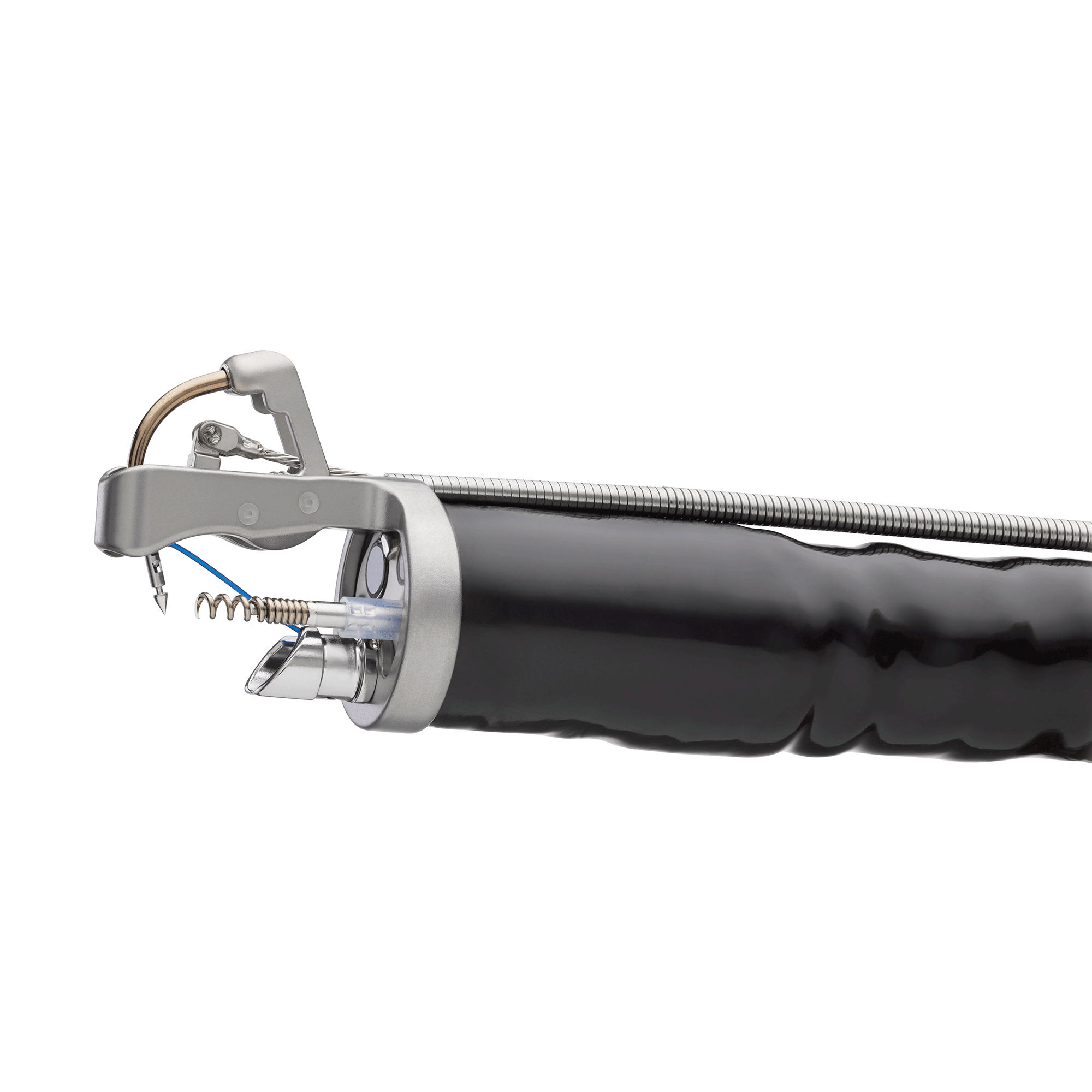
The OverStitch Endoscopic Suturing System is an endoscope-mounted device for endoscopic placement of sutures and approximation of soft tissue, used by trained gastroenterologists/surgeons to reduce stomach volume via endoscopic sleeve gastroplasty (ESG) or to enable transoral outlet reduction (TORe) as a bariatric revision in adults with obesity (BMI 30–50 kg/m²).
Intended use
- Endoscopic placement of suture(s) and approximation of soft tissue.
- Used by trained gastroenterologists or surgeons performing bariatric procedures to facilitate weight loss by reducing stomach volume through endoscopic sleeve gastroplasty (ESG) in adults with obesity, BMI 30–50 kg/m², who have not lost or maintained weight loss through more conservative measures.
- Used by trained gastroenterologists or surgeons to facilitate weight loss in adults with obesity, BMI 30–50 kg/m², by enabling transoral outlet reduction (TORe) as a revision to a previous bariatric procedure.
- Per FDA De Novo authorization, devices should only be used for ESG or TORe revision by clinicians who have completed specific manufacturer training.
Precautions
- With the system installed, the endoscope's primary channel effectively becomes a 3.2 mm channel.
- An overtube with internal diameter of at least 16.7 mm may be used to protect the esophagus.
- Verify compatibility of endoscope size, instruments and accessories; refurbished scopes may no longer conform to original specifications.
- Ensure sufficient space for the Needle to open and that standard channel valves are fitted; do not use with valve covers closed (increases suture drag).
- Keep the Tissue Helix clean of debris (periodic debridement may be needed); the NXT Tissue Helix Pro is only compatible with OverStitch NXT and should not be inserted within the endoscope channel.
- If resistance is encountered advancing the Anchor Exchange or Helix through the working channel, reduce endoscope angulation until it passes smoothly.
- Do not depress the Helix Handle button while advancing the Helix, or the tip may damage the endoscope channel lining.
- Do not press the Anchor Release Button (risk of inadvertent anchor drop); do not release the Anchor inside the working channel; do not tension the suture with the Anchor in the Needle Body.
- Remove the safety spacer only immediately prior to Cinch deployment and maintain suture tension during deployment.
- Ensure the external cable is not twisted around the endoscope and the suture is not tangled after removal from the Racetrack.
Contraindications & warnings
Contraindications — Includes contraindications specific to endoscopic suturing systems and any endoscopic procedure: not for use where endoscopic techniques are contraindicated; not for use with malignant tissue. For bariatric procedures: large hiatal hernia; potential bleeding gastric lesions (ulcers, erosive gastritis, varices, vascular malformations); affective disorders not under medical supervision or refractory to therapy and all eating disorders; pregnant women; coagulopathy and antiplatelet/anticoagulant therapy that cannot be corrected.
- Ensure the Handle Grip of the Endoscopic Suturing System is closed and locked during intubation and extubation, and ensure the Endcap is fully seated on the endoscope. Failure to do so may dislodge the endcap or otherwise result in patient injury.
- When cinching the suture anchor to form plications, use the minimum tension necessary to maintain the plication. Excessive tension may increase the risk of gastrointestinal bleeding, leak, or suture-anchor breakage compromising the gastric sleeve.
- Contains nickel (possible allergic reaction in sensitive individuals). Keep electrosurgical components from contacting other components. Keep the Handle Grip closed/locked and the Endcap fully seated during intubation/extubation. The needle may become trapped in a foreign body, possibly requiring intervention. Avoid suturing the thin-walled fundus (avoid this region for ESG) due to leak and adjacent-organ injury risk; be aware of risk to short gastric artery along the greater curve. Use minimum cinch tension; excessive tension risks bleeding, leak, or anchor breakage. Watch for post-procedure pain/hemodynamic instability (extra-gastric bleeding) and persistent upper abdominal/pleuritic symptoms (puncture-site leak).
Companion devices
- Endoscope
- OverStitch Tissue Helix / NXT Tissue Helix Pro
- Anchor Exchange
- Suture Anchors and Cinches (Anchoring System)
- Endcap
- Overtube (optional)
- CO₂ insufflation (bariatric procedures)
Handling & storage
- Single use only. Do not reuse, reprocess or sterilize — may compromise structural integrity, lead to device failure, or create contamination/infection risk.
- Anchoring System (Sutures, Cinches, Anchors) is MR Conditional: safe to scan immediately after placement at 1.5 T or 3.0 T, max spatial field gradient 2,000 gauss/cm (20 T/m), whole-body averaged SAR ≤ 2 W/kg; expected temperature rise <2 ºC after 15 minutes; image artifact extends ~10 mm at 3.0 T gradient echo.
- Rx only — Federal Law (USA) restricts this device to sale by or on the order of a physician.
How to use
- 1
Verify compatibility and prepare scope(optional)
Verify compatibility of endoscope size, endoscopic instruments and accessories and ensure performance is not compromised. Note that refurbished scopes may no longer conform to original specifications. An overtube with internal diameter of at least 16.7 mm may be used to protect the esophagus.
- 2
Mount device and seat endcap
Mount the suturing device onto the scope and, if using an overtube, verify compatibility prior to use. Ensure the Endcap is fully seated on the endoscope, otherwise it can dislodge and cause patient injury.
Do not introduce the device with the Needle Body in its open position; doing so may damage the device and/or injure the patient.
- 3
Insufflate (bariatric)(optional)
For bariatric procedures, use Carbon Dioxide (CO₂) for insufflation. Room air should not be used and could contribute to serious adverse events including pneumoperitoneum, pneumothorax, pneumomediastinum, and death.
- 4
Intubate with handle locked
Ensure the Handle Grip is closed and locked during intubation and extubation. When intubating or extubating, ensure the working length of the endoscope and the actuation cable are advanced and retracted together.
Never advance or retract the endoscope in an overtube against significant resistance, as this may cause esophageal perforation or laceration.
- 5
Retract tissue with Tissue Helix as needed(optional)
Where the operative site risks harm to adjacent structures, use the OverStitch Tissue Helix to retract tissue away from unseen structures. Deploy carefully and avoid excessive pressure or excess turns; keep the helix clean of debris during use.
Performing more turns than necessary may increase the risk of capturing and suturing an adjacent organ and of the helix entrapping tissue.
- 6
Create suture slack
Ensure appropriate suture slack has been created for the desired suture path and pattern; advance Anchor Exchange and/or manipulate the endoscope to create slack. Apply tension to the suture at the proximal end while advancing the Anchor Exchange to prevent entanglement.
Not creating sufficient slack could result in suture breakage or patient injury, and may prevent correct Anchor release from the Needle Body.
- 7
Drive Anchor through tissue
Use a 'pencil-grip' on the white section of the cable with remaining fingers on the endoscope housing to prevent damage to the suture or tissue once the Anchor 'pops' off the Needle Body. Do not release the Anchor inside the endoscope's working channel.
Do not tension the suture with the Anchor in the Needle Body; this could prevent completing the suture sequence or break the suture.
- 8
Reseat endcap if cleaning between stitches(optional)
If the endoscope is removed between stitching for cleaning, ensure the Endcap is fully seated before the next intubation; reseat if necessary, otherwise it can dislodge and cause patient injury.
- 9
Cinch and deploy
Remove the safety spacer only immediately prior to deploying the Cinch to avoid inadvertent suture cutting. Maintain suture tension during Cinch deployment, using the minimum tension necessary to maintain the plication.
If suture tension is not maintained during Cinch deployment, tissue approximation may be lost.
- 10
Remove device
Check the monitor to ensure the helix tip is fully retracted within its shaft before withdrawing into the endoscope. Do not hold the Needle Arm when removing the Endcap, as this may damage the device.
For clinical orientation only — not medical advice. All content is aligned with the manufacturer's official recommendations.
Specifications
Education
Clinician reviews
No reviews yet. Reviews come from clinicians we invite.
Reviews are by invitation. Interested clinicians can get in touch →